Malaysia is one of Southeast Asia’s most dynamic economies, strategically positioned as a key link in global supply chains. Having benefited from great power tensions, Malaysia continues to attract significant foreign investor interest, particularly in high-tech industries which are driving remarkable growth this year, despite global economic headwinds.
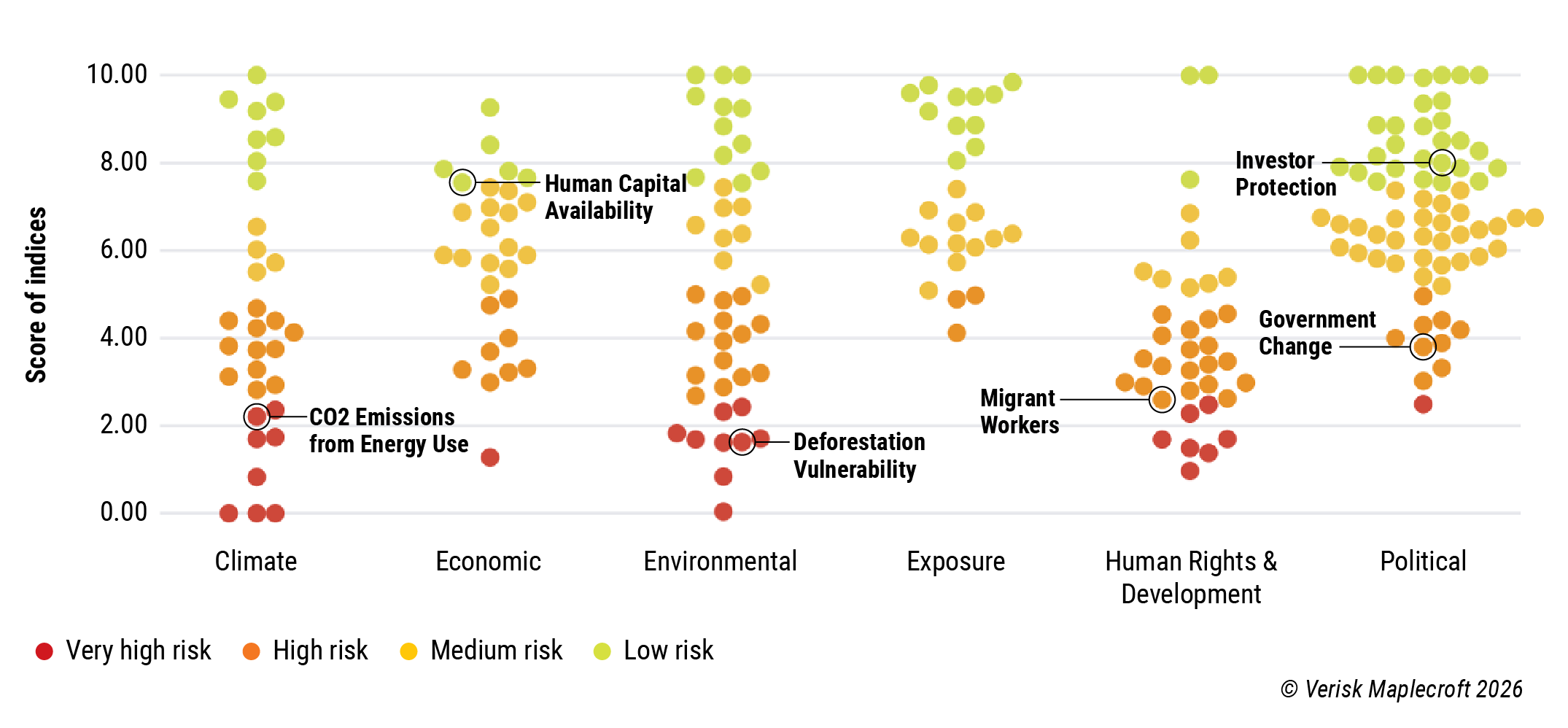
However, a new wave of political volatility may be taking shape. After a six-decade streak of uninterrupted Barisan Nasional (BN) rule collapsed in 2018 amid a major corruption scandal, Malaysia experienced intense political flux: five prime ministers in four years, repeated coalition realignments and executive fragility. Prime Minister Anwar Ibrahim has held together a complex, ideologically diverse coalition since 2022, but with the next general election approaching in early 2028 or earlier, fault lines are deepening. Malaysia currently ranks as fifth-highest at risk on our Government Change Index in the Asia-Pacific region.
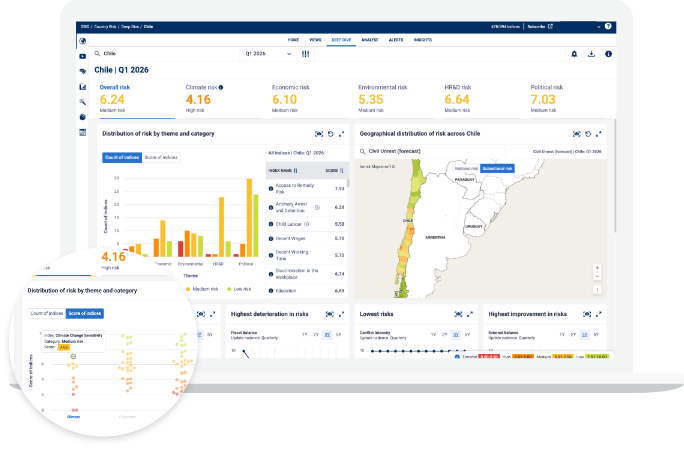
Anwar’s leadership is increasingly challenged by growing disquiet within his own Pakatan Harapan (PH) coalition, as well as by stronger performance from key rivals. Dissatisfaction within his reform-minded base is reflected in our “Deep Dive” view – part of our Global Risk Dashboard (GRiD) – as high and rising risk on our forecasted. Together, these dynamics result in a high-risk score for Malaysia on our Government Change Index.
Malaysia’s investment attraction prowess stems from its fundamentally stable institutional environment, supported by competent regulatory bodies and relatively transparent governance structures. Yet Malaysia also brings notable risks around resource nationalism and local content requirements, as well as labour rights risks stemming from reliance on migrant workers, among others.
Resource nationalism
One notable aspect of operating in Malaysia is the proliferation of affirmative action policies supporting increased participation of ‘Bumiputera’ – ethnic Malays and other indigenous people – in the domestic economy. Added regulatory complexity stems from overlapping and shifting federal and state-level regulatory authority, increasing as several state governments seek larger roles and shares of economic profits from their jurisdictions.
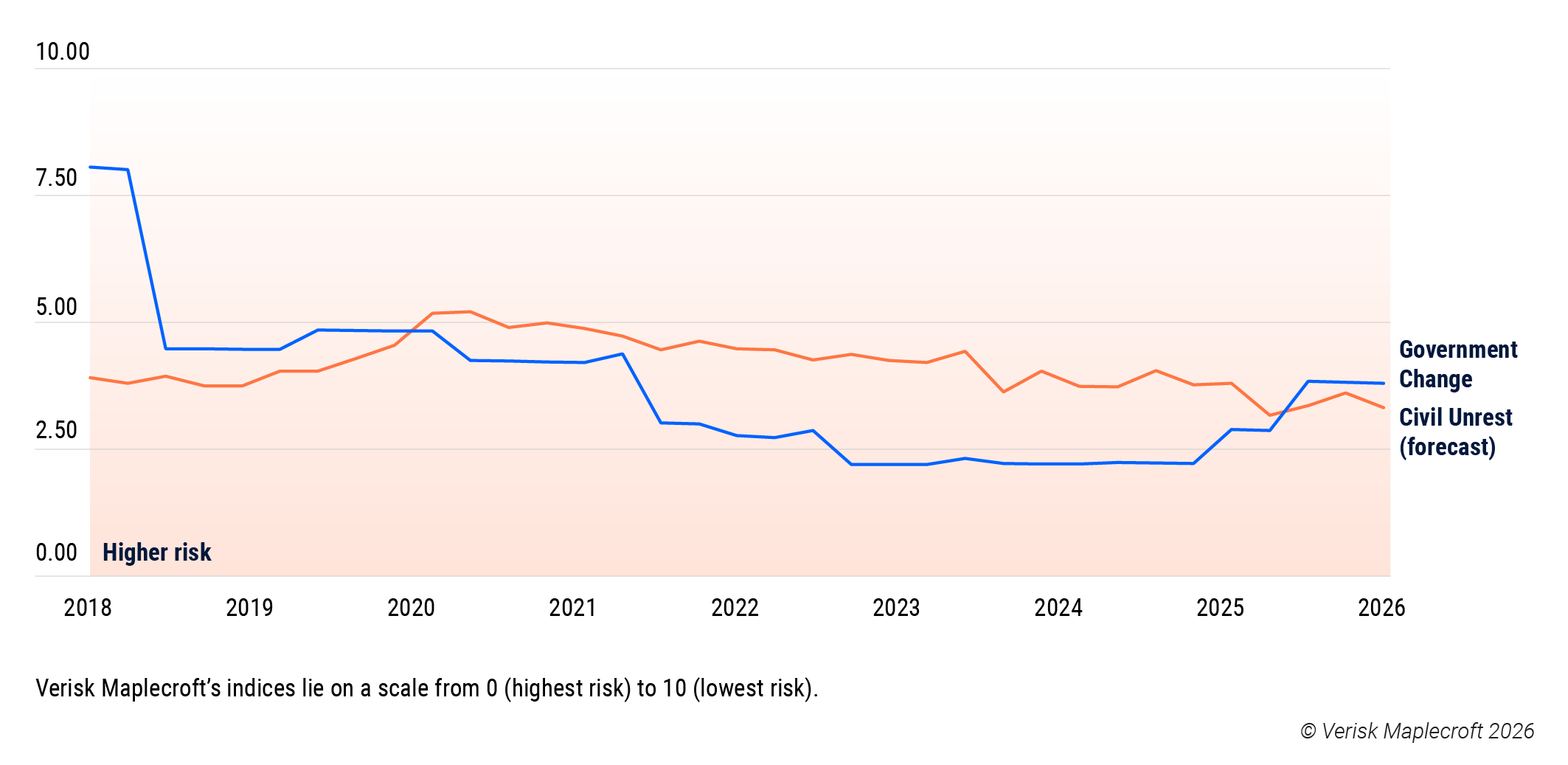
These factors have driven Malaysia’s high-risk score on our Resource Nationalism Index, and it is also one driver behind Malaysia’s additional high-risk score on our Corruption Index, which impacts business operations as well. While resource nationalism is not just a high risk in Malaysia as illustrated below, companies seeking new or expanded operations in Malaysia – particularly in strategic industries like energy, critical minerals and high-technology manufacturing – may face a shifting regulatory environment stemming from associated regulatory requirements.
Labour risk
Another notable aspect of business operations in Malaysia is its reliance on foreign labour, particularly in construction, manufacturing and natural resource industries. Migrant welfare and labour rights organisations have spotlighted inadequate governance amid the prevalent use of third-party contractors for migrant labour recruitment. Both indirect and direct employment often involves outsourcing to recruitment agencies where the imposition of recruitment fees is customary for job placement, thereby binding workers to the contractor, at times without formal contracts.
Our Deep Dive view reveals Malaysia’s high-risk scores on our Migrant Workers and Forced Labour indices, and underlying other high-risk labour rights issues, including occupational health and safety, decent wages and decent working time – all of which have the potential to result in significant regulatory and reputational blowback on companies operating in Malaysia, if not properly managed.
Environmental risk
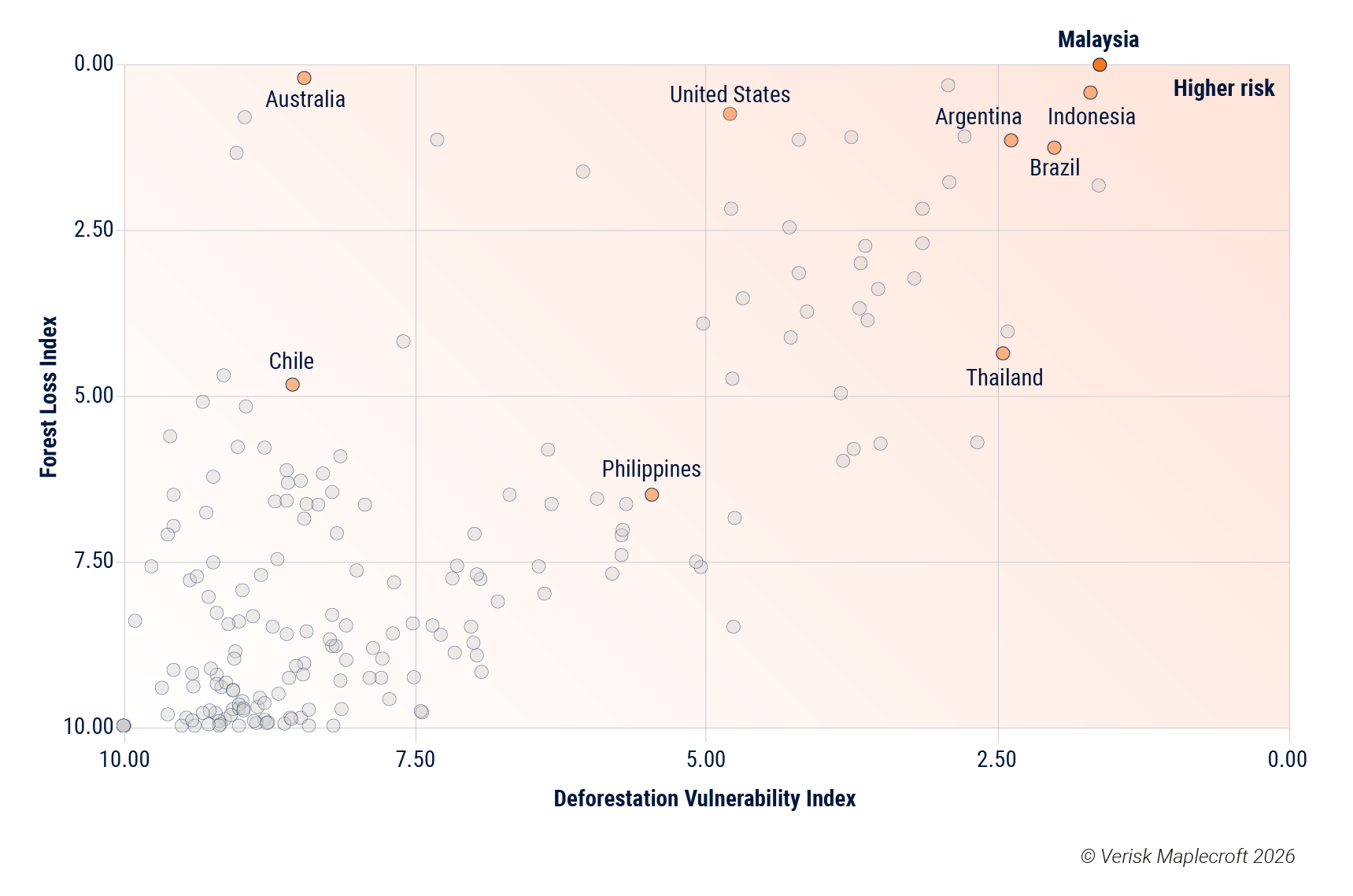
Environmental risks are also significant in Malaysia, as a relatively recently industrialised, fossil fuel dominant economy located within a tropical environment featuring significant biodiversity value; Malaysia is one of the world’s 17 megadiverse countries. Indeed, Malaysia’s highest risk issues within our Deep Dive analysis include several deforestation- and biodiversity-related risks. Malaysia is the highest risk country worldwide on our Forest Loss Index, stemming from illegal logging and clearances for palm oil, as well as our assessment of future deforestation risk – our Deforestation Vulnerability Index.
Despite recent progress around sustainable reporting guidelines and a taxonomy to guide business operations affecting pollution, biodiversity and resource pollution, Malaysia’s environmental risks may challenge companies considering environmentally sustainable supply chain expansion options.
Industry opportunities
Malaysia has solidified a position as a high-technology manufacturing hub, with recent growth in high-tech manufacturing building on decades of development in semiconductors manufacturing concentrated in Penang, Kedah, Selangor, and growing in Johor and Sarawak. Malaysia is a potential diversification market for critical minerals – particularly rare earths, for which it hosts the largest processing capability outside China.
Supported by the global AI and data centre boom, Malaysia’s growing role in advanced electrical and electronics industries – as well as investment attraction in data centres and clean energy supply chains – is supported by its strong (low risk) score on our Human Capital Availability Index, combined with lower labour costs compared to several other key high-tech manufacturing hubs, including South Korea, Singapore and Japan.
This recent growth in high-tech investment builds on a pre-existing foundation of strength in other key sectors, from oil and gas and agribusiness – Malaysia is the second-largest producer of petroleum in the Asia-Pacific and the fifth-largest exporter of LNG globally and #2 in palm oil exports – to its robust consumer market and growing tourism industry.
For companies operating in Malaysia, political volatility in the coming years could affect longer-term policy continuity and compound structural risks. While Malaysia is a market with significant opportunity, existing and emerging risks have the potential to challenging stable and predictable operations.
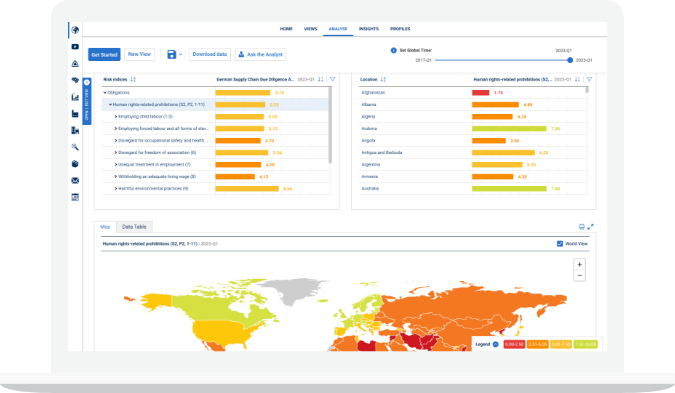
Increasing reactive agility to potential policy shifts, addressing high-risk labour rights issues, and tracking other top industry-specific risk areas are essential for resilient operations. Delving into the data with Deep Dive and GRiD can support companies considering entry or expansion in Malaysia, providing opportunities to compare markets, increase visibility on the risk issues of biggest concern, and unlock opportunities in a swiftly shifting geopolitical and economic environment.