Key Takeaways
- Identifying the country risks most likely to affect market entry keeps analysis focused on the most material risks
- Data-driven benchmarking enables consistent and quantifiable comparison across markets and risk themes
- Global Risk Data can be leveraged through GRiD, Deep Dive, or integrated into proprietary systems through file transfers and APIs
In 2026, entering new markets requires companies and investors to navigate a broader, more interconnected and harder-to-assess range of country risks. Shifting geopolitical currents, greater state intervention, evolving regulatory requirements and rising stakeholder expectations are increasingly influencing the viability of potential opportunities.
The challenge facing businesses is, as always, determining which risks matter most. With political, regulatory, security, social and environmental factors all potentially affecting an opportunity, organisations must identify the most material issues, account for their sector and operating model, and determine where mitigation or further due diligence is required.
To support a more structured approach, we have configured our suite of Country Risk indices around the key risk dimensions relevant to market entry. This enables organisations to compare potential markets consistently and drill down into the individual factors underlying their risk profiles. Combined with expert analysis and our Deep Dive views on specific regions, our data helps explain how these risks may evolve and what they mean for the proposed opportunity.
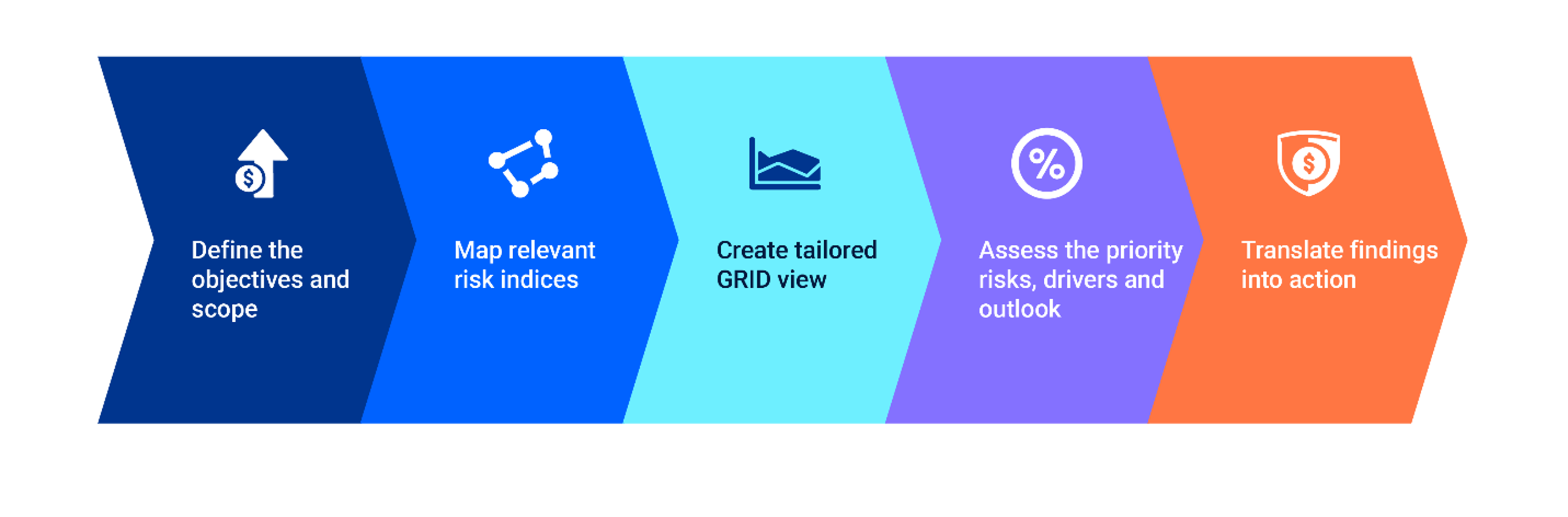
Define the objectives and scope
Before mapping relevant risks, organisations must define the purpose and scope of the market entry assessment. This includes clarifying the business objectives, and risk tolerance so that the analysis is aligned with the decision it is intended to support.
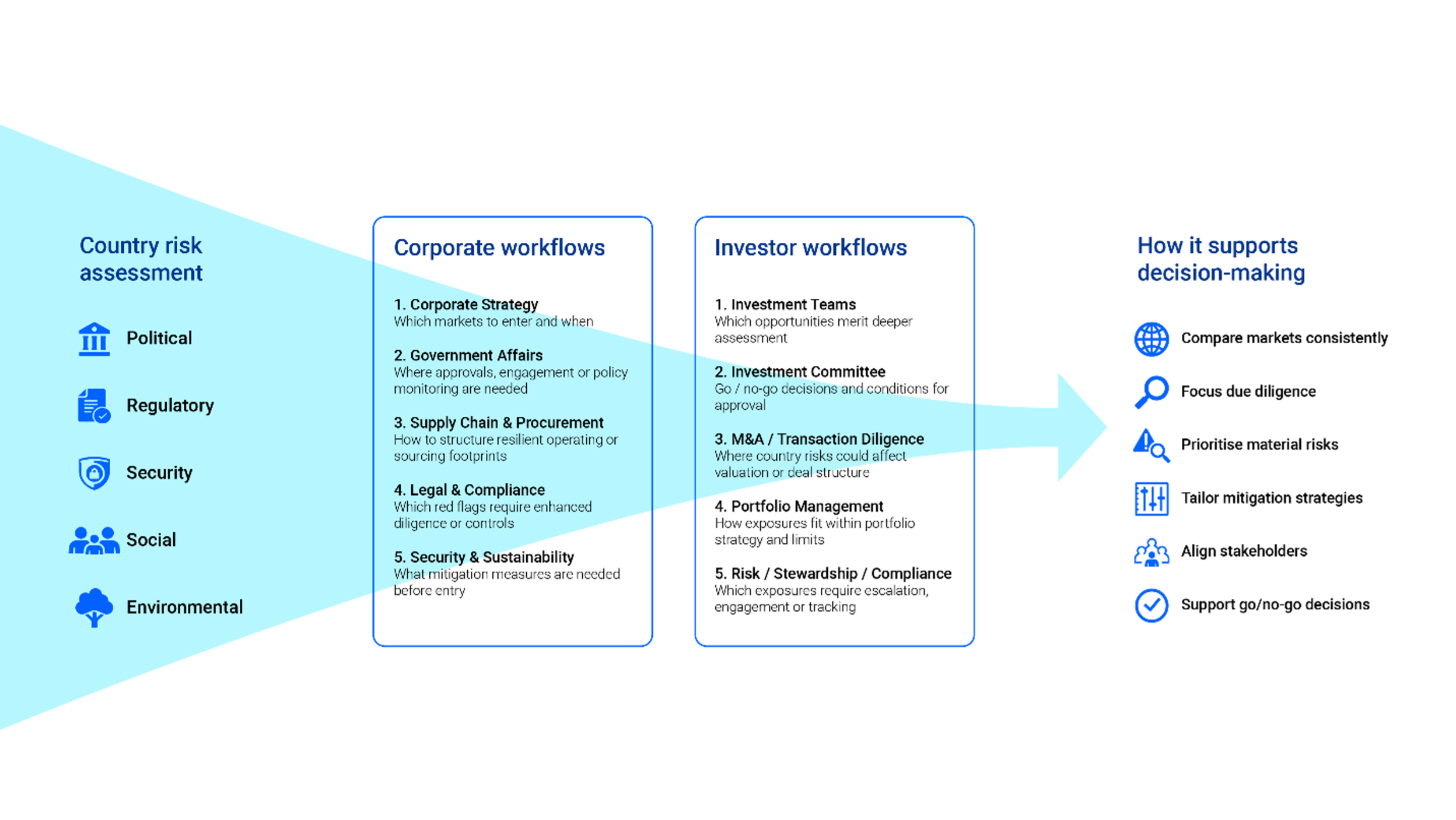
As Figure 2 illustrates, country risk assessments can inform a range of corporate and investor workflows, from market prioritisation and investment approval to transaction due diligence and risk reviews. They sit alongside financial, commercial and operational analysis, providing a structured view of the external risks that could affect the opportunity. Establishing the relevant decision process, internal owners and users at the outset helps focus the analysis on the most material risk themes, reflect different stakeholder requirements and avoid duplicating existing specialist assessments.
Map the relevant risk indices
Once the objectives and scope have been defined, the next step is to select the risk indices most relevant to the proposed opportunity. The choice of risk indices should reflect the operating model, geographic footprint and decision-making requirements, rather than applying a standard set of risks to every market.
The indices may then be grouped into thematic pillars to make the results directly comparable, quantifiable, and easier to interpret. These groupings can reflect the organisation’s strategic priorities and align with existing internal frameworks, such as enterprise risk registers. Figure 3 presents one illustrative configuration across political, regulatory, security, environmental and social risks. The choice of pillars, and the allocation of individual indices within them, can be adapted to the organisation’s priorities and the characteristics of the opportunity.
Figure 3: Illustrative selection of risk indices for market entry assessment
| Political | Regulatory | Security | Environmental | Social |
|---|---|---|---|---|
| Challenges to Government Authority | Corruption | Arbitrary Arrest and Deyention | Environmental Regulatory Framework | Freedom of Assembly |
| Civil Unrest (forecast) | Judicial Independence | Conflicyt Intensity | Proximity to Protected Areas | Forced Labour |
| Government Change | Regulatory Framework | Crime | Heat Stress | class="national"Indegenous Peoples' Rights |
| Resource Nationalism | Respect for Property Rights | Extrajudicial or Unlawful Killings | Water Stress | Land, Property and Housing Rights |
| Terrorism Risk | Transfer and Convertibility | Security Forces and Human Rights | Migrant Workers |
This approach provides visibility into the specific vulnerabilities shaping each market, rather than reducing country risk to a single aggregated score.
Create a tailored GRID view
Selected risk indices are then configured within our Global Risk Dashboard – or “GRiD” to create a single view of the markets under consideration. Users can compare geographies, scores, rankings, and trends across the relevant risk dimensions (see Figure 4), moving from a high-level market comparison to the individual country or subnational indicators underpinning the results. Portfolio countries can also be included as benchmarks. This allows users to assess how a prospective market compares with existing exposures, how it could affect the overall portfolio risk profile and whether particular risk themes stand out.
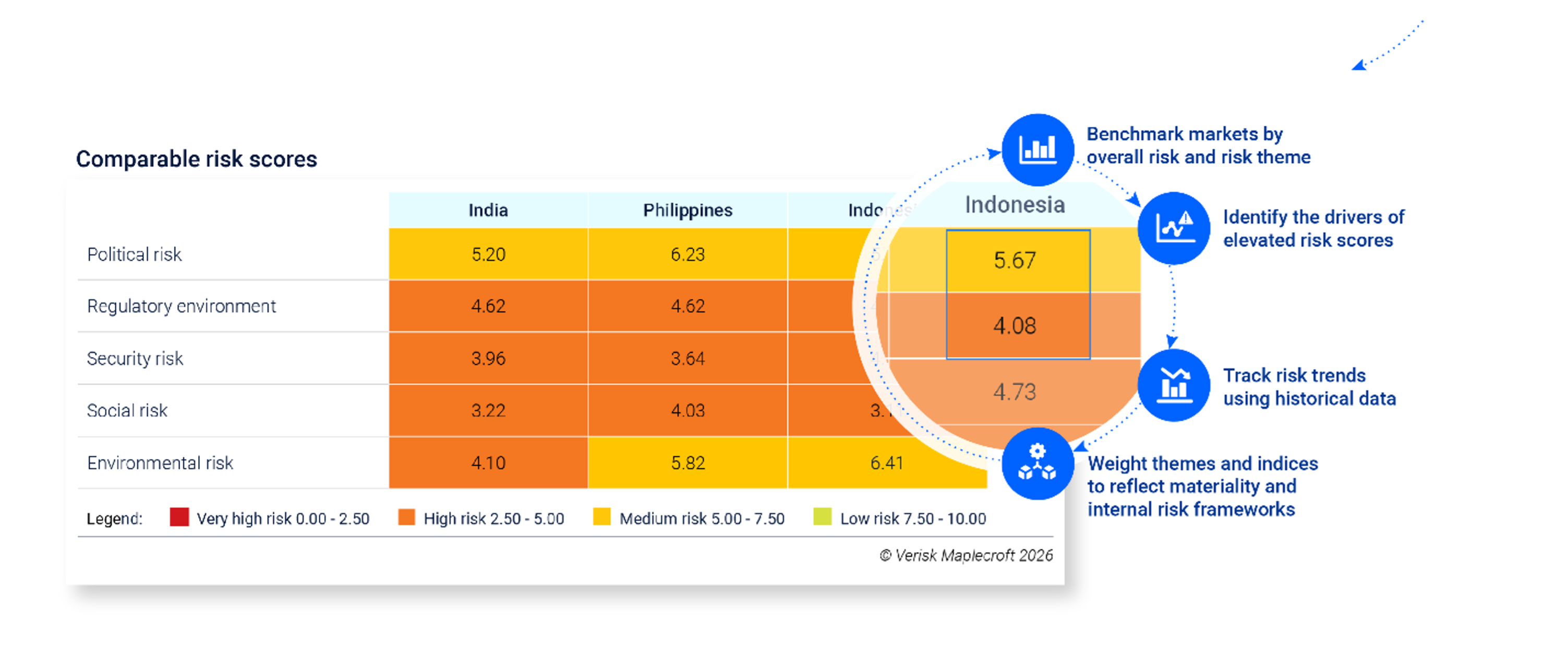
Where appropriate, indices and thematic pillars can be weighted according to their materiality to the business model or investment strategy. For example, an extractives project requiring extensive community consultation may place greater weight on indices tracking land rights and social unrest. A manufacturer in a strategically important sector like semiconductors may give greater weight to indices covering trade restrictions, geopolitical relations and regulatory intervention. The result is a more decision-relevant risk profile that retains visibility into the individual indicators behind it.
Deep Dive
Additionally, our Deep Dive view on GRiD provides a snapshot view by country of leading and emerging risks across different categories, with more in-depth analysis and exploration easily available to users – turning a country’s headline reform story into a structured, comparable and trackable risk picture. Explore our Deep Dive example insights across India, Malaysia and Argentina to find out more.
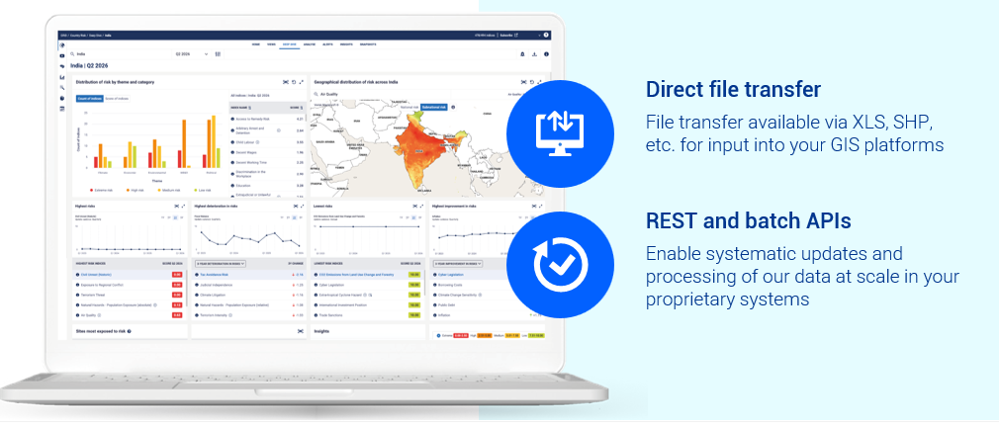
As Figure 5 illustrates, users can access the data directly through GRiD or integrate it into proprietary systems through file transfers and APIs, allowing country risk findings to be easily considered alongside financial, commercial and operational analysis.
Assess the priority risks, drivers and outlook
Once the data has highlighted priority risks, a team drawn from our 60+ country and thematic experts add qualitative analysis to market entry assessments. They examine how risks may interact and how they are likely to evolve over the life of the investment or operation. For example, upcoming elections could bring a change of government, raising investment risk through higher royalties or stricter local-content requirements. The proposed market is benchmarked against regional peers, alternative locations and jurisdictions already represented in the organisation’s portfolio. This adds context to the numbers and helps distinguish unusually acute risks from those more typical of comparable operating environments.
Analysts interrogate the evidence underpinning individual scores to identify concentrations of risk and location-specific vulnerabilities that may be obscured at the aggregate level. Subnational and asset-level data can provide further insight into how exposure varies across potential sites.
The assessments draw on more than 15 years of our market entry work across sectors. Case studies from peer companies and geographies illustrate how similar risks have impacted market access and investment outcomes, as well as how organisations have responded.
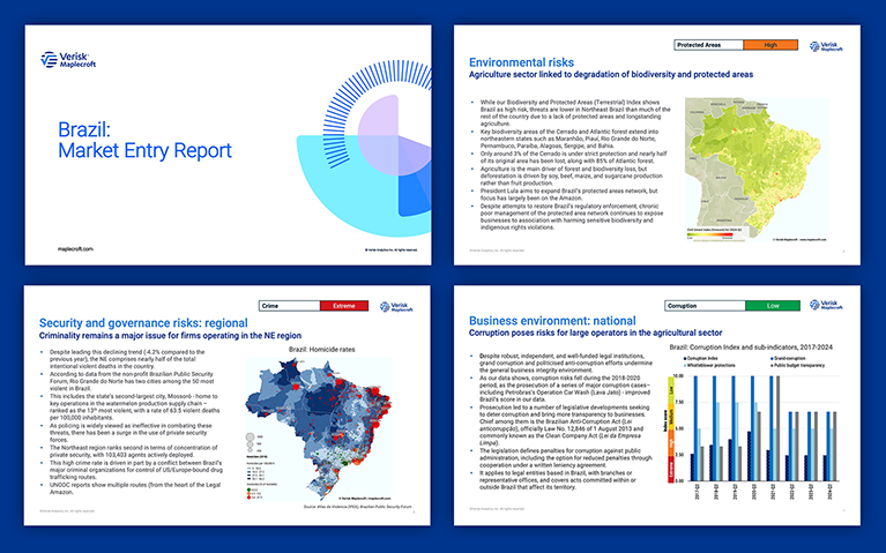
These findings are brought together in a tailored report for the specific audience and workflow. As Figure 6 illustrates, these reports combine expert commentary, risk ratings, maps and data visualisations. Internal teams also have direct access to the analysts behind the assessment, enabling them to test the findings, explore specific risks in greater depth and clarify the implications for the proposed opportunity.
Translate findings into action
The final step is to turn the assessment into a clear course of action. For each priority risk, organisations should identify practical mitigation options, any further due diligence required, the relevant internal owner and the indicators that should be monitored.
Our experts help businesses with these workflows and evaluate how different mitigation measures would work in practice – including the trade-offs they may create for the proposed operating model or investment strategy. The findings can then be fed back into the relevant decision workflows and used to determine whether to proceed as planned, adjust the approach, defer entry or reconsider the opportunity. The result is not simply a clearer view of market entry risks, but a defined path forward.
Download one of our sample market entry reports below for a more in-depth view on how we assess country risk for businesses – or get in touch to find out more on our risk data and services.